Communication Mediums: How Writing Evolved Speech
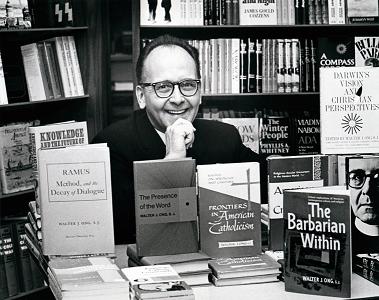
In this post, I will explore Walter Ong's 1977 speech to the National Humanities Institute that focuses on how writing evolved oral culture.
Transcript:
In his 1977 address to the National Humanities Institute, Walter Ong explores how writing became a transformative technology that fundamentally reshaped how humans would think, how we communicated with one another, and how it reshaped our culture.
Ong talks about a world that existed before writing did: a purely oral culture, where all knowledge was stored in memory and shared through speech. In these societies, people could not “look things up.” Instead, everything depended on recall and repetition, therefore knowledge only existed if someone remembered it.
"In a culture like this, remember, nobody has ever looked up anything. When anybody was born. When anybody died, what belongs to whom when, when anything happened. In fact, they don't have the idea of looking up. See, remember to say it to look up something. That means you know how to read and write. All they can do is recall" (Ong, 00:20-00:44).
Oral societies relied on aphorisms and proverbs since nothing was written or could be referred back to. Even when stories were remembered and told accurately, these were never recited verbatim. Before written language, humans could remember meanings, but not complete, precise wording. Ultimately, every telling was slightly different no matter how well someone may have remembered the details of a story or thought.
"Remember, don't forget that, that in oral cultures, although these people have fantastic memories, it's never verbatim, no oral culture in the whole world. So, so far as we can tell by a massive surveys, it can. Recite of things say, as long as the ene creed verbatim, they're absolutely incapable of it. They can tell you the story accurately. They can use formulas, but every time they tell it, it'll be a little bit different" (Ong, 2:40-2:59).
However, Ong explains how a new kind of thinking became possible once humans started to write. Before writing, people could only tell stories or sayings but could not necessarily share a reasoned argument as speech alone could not hold that much structure in memory the same way written language does. With writing, humans could analyze and record more complex thoughts as ideas were structured logically, step by step. For instance, humans created treatises: organized analytical works that explained causes and effects systematically. Although, Ong clarifies that writing did not replace speech but transformed it. Society did not stop using orality as a main form of communication. In fact, people spoke more than ever, but it was different. Writing changed oral expression itself, making speech more organized and reflective. Over time, people started to speak in a manner that sounded similar to writing. Meaning, they adopted the precision and structure that writing had introduced. As a result, literacy did not necessarily erase orality, but evolved it.
"So you see what's happened here is that the new medium, writing, has reinforced the old. It's made talkers talk more, but it's made them talk differently. And that's what always happens when a new medium comes in. It never wipes out the old, it always reinforces it" (Ong, 6:14-6:35).
Ong’s speech explains how writing was more than just recording our thoughts onto paper. Instead, it was a technology that changed the way we think and communicate with each other. This makes me wonder how our thinking will change as our tools continue to evolve. More specifically, how can the mediums that we are using today, especially artificial intelligence, continue to affect the way we think and share knowledge in the future? Will society continue to use AI as a mere tool to expand our thinking? Or despite Ong’s claim, will this medium completely wipe out our old ways of creativity and how we think?